Hotel Accommodation and Room Experience
Accommodation is at the center of every hotel experience. Guests expect their rooms to provide a comfortable place to rest, relax, and prepare for the activities planned during their stay. The quality of a hotel room is influenced by its design, cleanliness, furnishings, maintenance, and available facilities.
For travelers considering The Royal Hotel Dubai, confirming the actual room categories and services offered by the property is an important part of the booking process. Different hotels may provide standard rooms, superior rooms, deluxe rooms, suites, and family accommodation. These categories vary according to the size of the room, available amenities, and overall layout.
A comfortable hotel room generally includes a bed, storage space, a private bathroom, lighting, air conditioning, and a work or seating area. Additional facilities may include a television, a refrigerator, a safe, internet access, and tea or coffee making equipment. The availability of these amenities depends on the specific hotel and room category.
Dubai has a warm desert climate, making effective air conditioning particularly important for visitors. Travelers arriving during the summer months may spend considerable time indoors during the hottest parts of the day. A well-maintained climate control system can contribute to a more comfortable stay.
Room cleanliness is another major consideration. Housekeeping services are responsible for maintaining guest rooms, replacing towels, managing linens, and addressing routine cleaning requirements. Guests should check the hotel’s stated housekeeping schedule and ask about additional cleaning services if necessary.
Business travelers may require a desk, reliable internet access, and sufficient lighting for working. Families may prioritize larger rooms, additional beds, and convenient bathroom arrangements. Couples and leisure travelers may focus more on room atmosphere, views, and proximity to attractions.
The best accommodation choice depends on the individual guest’s expectations and budget. A room should be assessed not only by its appearance but also by the practical facilities it provides.
Interior Design and Hotel Atmosphere
Interior design contributes significantly to the identity of a hotel. Properties in Dubai often use a combination of contemporary architecture, carefully selected furnishings, decorative lighting, and attractive public spaces to create a distinct atmosphere.
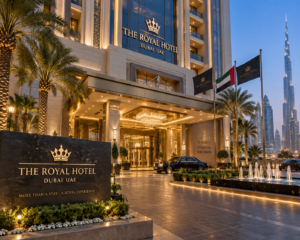
A hotel with royal inspired branding may choose design elements that communicate elegance. These could include refined furniture, decorative details, spacious reception areas, and a coordinated color scheme. However, the actual design of The Royal Hotel Dubai should be confirmed through official photographs or verified property information.
Hotel atmosphere extends beyond interior decoration. It includes the way guests experience the reception area, corridors, elevators, dining spaces, and common facilities. A well-organized environment can make visitors feel more comfortable when they arrive and throughout their stay.
Lighting is an important aspect of hospitality design. Bright lighting may support practical activities such as checking in and navigating public spaces, while softer lighting can create a more relaxed atmosphere in restaurants and lounges. Design choices vary from one property to another.
The cleanliness and maintenance of public areas are also essential. Guests generally expect reception areas, elevators, hallways, and shared facilities to be maintained consistently. These details influence perceptions of the overall hotel experience.
In a competitive market such as Dubai, hotel design can help a property distinguish itself. Nevertheless, design should be considered alongside service, location, pricing, and the actual facilities available to guests.
Reception and Guest Services
The reception desk is often the first point of direct contact between a guest and a hotel. Reception staff assist with arrival procedures, reservations, room assignments, and general inquiries. Their work helps establish the initial impression of the property.
At The Royal Hotel Dubai, the exact reception services and operating arrangements would depend on the individual establishment. Travelers should review check in and check out policies before arriving, particularly when they have late night flights or early departures.
A standard hotel check in process may involve confirming the reservation, presenting identification, completing registration requirements, and receiving room access. Hotels may also request a security deposit or payment authorization, depending on their policies.
Guests should understand the conditions associated with their booking. These may include cancellation terms, payment deadlines, additional guest charges, and age requirements for check in. Policies can differ significantly between properties, even when their names are similar.
Reception staff may also assist guests with directions, transportation questions, restaurant information, and requests for additional services. The range of support available depends on the hotel’s staffing and operating procedures.
Communication is particularly important in an international destination such as Dubai. Visitors come from many countries and may have different expectations regarding hotel procedures. Clear information about services and charges can help reduce confusion.
Professional guest service involves more than polite communication. It also includes accurate information, timely responses, appropriate handling of requests, and respect for guest privacy.
Dining and Food Services
Food and beverage services are an important component of the hotel industry. Many travelers prefer accommodation that provides convenient access to breakfast, restaurants, cafes, or room service.
The dining facilities at a particular Royal Hotel in Dubai should be verified directly with the property. Not every hotel offers the same restaurant selection, operating hours, or meal packages.
Breakfast is often a practical consideration for both leisure and business travelers. Guests may choose a hotel that offers an on site breakfast service to save time before sightseeing, meetings, or other activities. Available menu options depend on the establishment.
Some hotels provide restaurants serving regional and international cuisine. Dubai’s hospitality industry reflects the city’s international population, and dining options across the city include Arabic, South Asian, East Asian, European, and other culinary traditions.
Travelers should check whether breakfast is included in their room rate or charged separately. They should also confirm restaurant opening hours and whether advance reservations are required.
Room service, when available, offers guests the convenience of ordering food directly to their accommodation. This can be useful for visitors who prefer to dine privately or arrive at the hotel outside regular restaurant hours. Service availability and additional fees vary.
Food quality, hygiene, pricing, and menu variety are relevant considerations when evaluating hotel dining services. Guests with dietary requirements should contact the property in advance to discuss available options.
Facilities for Leisure and Relaxation
Hotels in Dubai serve visitors with different expectations regarding recreation and relaxation. Some properties emphasize accommodation and convenient city access, while others provide extensive leisure facilities.
Potential hotel amenities may include a swimming pool, fitness center, spa services, lounge areas, and outdoor seating. The availability of these facilities at The Royal Hotel Dubai must be confirmed through the specific property’s official information.
A swimming pool can be attractive to guests who want to relax after a day of sightseeing. In Dubai’s warm climate, pools may provide a useful recreational option. Visitors should check operating hours, access rules, and whether the facility is included in their booking.
Fitness facilities may appeal to travelers who want to maintain their regular exercise routines while away from home. A hotel gym can provide convenience, although equipment and opening hours vary.
Spa services, where offered, can be part of a broader relaxation experience. Guests should check the types of treatments available, pricing, and whether appointments are necessary.
The availability of leisure facilities can influence a traveler’s decision, but these amenities should be assessed according to personal priorities. Someone who spends most of the day exploring Dubai may place greater importance on location than on extensive hotel recreation.
Business Travel and Professional Accommodation
Dubai is an important destination for business visitors, corporate meetings, trade exhibitions, and international events. Hotels serve professionals who require accommodation during short business trips, extended assignments, and conferences.
Business travelers often consider several practical factors when selecting a hotel. These include transportation access, internet connectivity, workspaces, meeting facilities, and the ability to manage schedules efficiently.
The suitability of The Royal Hotel Dubai for business travel depends on its actual services and location. Travelers should confirm whether the property offers meeting rooms, business support, printing services, or other professional amenities.
A comfortable working environment can be valuable for guests who need to complete tasks outside their offices. A desk, adequate lighting, and reliable internet access may support basic business activities.
Meeting facilities are relevant for companies organizing presentations, training sessions, interviews, or private discussions. The capacity and equipment of meeting spaces vary by hotel.
Transportation is another consideration. Business travelers may need to reach offices, commercial centers, exhibition venues, and airports within a limited period. A hotel with convenient transport options may simplify daily arrangements.
Corporate guests should also examine payment arrangements and booking policies. Some companies require invoices, flexible cancellation terms, or specific billing procedures. These requirements should be discussed with the hotel before confirmation.
Exploring Dubai During a Hotel Stay
Dubai offers a broad range of attractions for visitors. Travelers can explore modern architectural landmarks, shopping destinations, beaches, cultural sites, entertainment venues, and traditional markets.
The experience of exploring the city depends partly on the location of the accommodation. Guests staying near major transport connections may find it easier to plan visits to different areas.
Burj Khalifa is one of Dubai’s most recognized landmarks. The building is associated with the city’s modern skyline and attracts visitors interested in architecture and panoramic views. Admission arrangements and visitor access should be checked through official sources.
Dubai Mall is another major attraction, combining retail shopping, dining, and entertainment. Visitors often include shopping centers in their itineraries, especially during hot weather when indoor activities are convenient.
Dubai Marina is known for its waterfront setting, restaurants, residential towers, and leisure environment. Its appeal varies depending on the time of day and the activities visitors choose.
Traditional markets, including souk areas, provide a different experience from Dubai’s modern shopping malls. Guests interested in local history, trade, and cultural surroundings may want to explore these locations.
The distance between a hotel and individual attractions should be considered when planning daily activities. Travelers can use public transportation, taxis, ride services, or private vehicles depending on their preferences and circumstances.
A practical itinerary should allow sufficient time for travel, rest, and unexpected delays. Dubai’s traffic conditions can change throughout the day, so visitors should plan accordingly.
Transportation and Accessibility
Transportation is an essential part of the travel experience. Dubai has several transportation options, including the Dubai Metro, public buses, taxis, and private transportation services.
The most suitable method depends on the hotel’s location and the guest’s destination. Travelers should identify the nearest metro station or major road connections when assessing accommodation options.
The Dubai Metro serves several important areas of the city and can be useful for visitors traveling between selected commercial, residential, and tourist locations. However, not every hotel is within walking distance of a metro station.
Taxis provide a flexible option for guests who need direct transportation. The cost of a journey depends on factors such as distance, applicable fares, and traffic conditions.
Airport transportation is especially important for travelers arriving late at night or departing early in the morning. Guests should confirm whether the hotel offers airport transfers and whether those transfers involve additional charges.
Visitors who plan to rent a vehicle should consider parking arrangements. Some hotels offer parking, but availability and fees vary. Travelers should confirm the relevant policy before arrival.
Accessibility is another important consideration. Guests with mobility requirements should contact the hotel to ask about elevators, accessible rooms, bathroom facilities, entrances, and other relevant arrangements.
Clear transportation planning can make a hotel stay more convenient and reduce unnecessary delays.
Hospitality Standards in Dubai
Dubai’s hospitality industry serves a diverse international audience. Hotels operate in a market where guests may have different cultural expectations, languages, budgets, and travel purposes.
Hospitality involves several interconnected elements, including cleanliness, communication, reliability, safety, and the quality of guest interactions. The standards of an individual hotel depend on its management, employees, facilities, and operating procedures.
A hotel may use training programs to help staff understand guest service requirements. Training can cover reception procedures, housekeeping, food safety, customer communication, and emergency responses.
Guest satisfaction is influenced by whether the hotel delivers the services described during the booking process. Accurate information about room types, amenities, pricing, and policies helps guests make informed choices.
The quality of hospitality should be evaluated using verified information and actual guest experiences. A hotel’s name or promotional language does not automatically establish the level of service provided.
Travelers can consult official hotel information, recent reviews, and booking conditions before making a decision. Reviews should be considered carefully because individual experiences can vary.
Guests should also understand that service availability may change over time due to renovations, staffing, seasonal operations, or management decisions. Confirming current information directly with the property is useful.
Cleanliness and Maintenance
Cleanliness is a fundamental part of hotel operations. Guests expect accommodation and shared areas to be maintained in a hygienic and functional condition.
Housekeeping teams are responsible for cleaning guest rooms and, depending on the hotel, maintaining other areas such as hallways, public restrooms, and shared spaces.
Room maintenance involves more than cleaning surfaces. It can include checking lighting, air conditioning, plumbing, furniture, and other equipment. Prompt attention to maintenance issues helps reduce disruption during a guest’s stay.
Travelers should review the hotel’s housekeeping policy and understand how to request assistance. Some properties provide daily housekeeping, while others operate according to different schedules.
Bathroom cleanliness is a particularly important consideration for guests. Functional plumbing, clean fixtures, adequate towels, and appropriate supplies contribute to the practical quality of accommodation.
Public spaces should also be maintained consistently. Reception areas, elevators, and corridors are used by many visitors and require regular attention.
If a guest encounters a problem, communicating with the reception team promptly may help resolve the issue. The response depends on the hotel’s procedures and the nature of the concern.
Cleanliness and maintenance are essential considerations when evaluating any hotel, regardless of its size, location, or branding.
Safety and Guest Security
Safety is an important concern for travelers selecting accommodation. Hotels have responsibilities related to the maintenance of their facilities and the implementation of relevant safety procedures.
Guests should confirm the hotel’s policies concerning emergency exits, room access, identification, and security arrangements. Specific systems vary between properties.
Fire safety is an important part of hotel operations. Visitors should familiarize themselves with emergency exit information and follow instructions provided by hotel staff.
Room access procedures help protect guest privacy and security. Travelers should follow the property’s instructions for key cards, room entry, and reporting lost access devices.
Guests should take reasonable precautions with valuables and personal belongings. Hotel safes may be available, but the exact facilities and policies depend on the property.
Travel insurance may provide additional protection for certain travel-related risks, subject to the terms of the policy. Travelers should review their coverage before departure.
Security expectations should be discussed with the hotel when guests have specific concerns. Families, solo travelers, and business visitors may have different practical requirements.
Reliable safety information should come from the hotel or relevant official authorities rather than assumptions based solely on its name or promotional materials.
Booking The Royal Hotel Dubai
Booking accommodation requires attention to several details. Travelers should begin by identifying the exact property and confirming its official booking channels.
The name The Royal Hotel may be shared by different establishments, so it is important to verify the address, contact information, and property details before making a payment.
Guests can compare accommodation options using hotel websites and established booking platforms. The information provided should include the room type, dates, number of guests, and applicable charges.
Pricing can vary according to the travel season, room category, availability, length of stay, and booking conditions. Dubai experiences periods of higher visitor demand, which may affect accommodation rates.
Travelers should review whether the advertised price includes taxes, service charges, breakfast, and other additional costs. The final amount should be confirmed before completing a reservation.
Cancellation and refund conditions are also important. Some reservations offer flexibility, while others may include restrictions or nonrefundable terms.
Guests should keep confirmation details and contact information for the property. If a problem occurs during the booking process, these records may be useful when communicating with the hotel or booking provider.
Travelers should be cautious of unofficial websites, misleading advertisements, and requests for payment through unverified channels. Using a trusted booking method can help reduce the risk of booking errors or fraudulent activity.
Seasonal Travel in Dubai
Dubai’s climate influences travel planning throughout the year. The city generally experiences hot summers and milder winter conditions.
The cooler months are often attractive to visitors who want to spend time outdoors. Activities such as walking, sightseeing, and visiting outdoor attractions may be more comfortable during suitable weather conditions.
Summer temperatures can be extremely high, particularly during the daytime. Visitors may prefer indoor attractions, air conditioned facilities, and carefully planned outdoor activities.
Hotel availability and prices can change according to demand and major events. Travelers should compare dates and booking conditions before deciding when to visit.
Guests should consider their personal tolerance for heat and their preferred activities. A trip focused on beaches and outdoor sightseeing may require different planning from a trip centered on shopping, business, or indoor entertainment.
Weather conditions can also influence transportation arrangements. Visitors should allow time for travel and consider the conditions when organizing daily schedules.
Checking current weather information and official travel guidance before departure can help guests prepare appropriately.
Cultural Awareness and Responsible Travel
Dubai welcomes visitors from a wide range of backgrounds. Travelers can contribute to a positive experience by respecting local laws, customs, and cultural expectations.
Visitors should familiarize themselves with relevant regulations before traveling. Rules concerning public behavior, photography, dress, and other activities may differ from those in their home countries.
Respectful communication is important when interacting with hotel staff, residents, and other visitors. Cultural awareness helps travelers navigate unfamiliar environments more comfortably.
Guests should also consider responsible tourism practices. These may include avoiding unnecessary waste, respecting hotel facilities, and using water and electricity thoughtfully.
Hotels use significant resources to provide accommodation, cleaning, cooling, and other services. Guests can support responsible operations by following applicable recycling and conservation practices.
Travelers should respect the privacy of other guests and avoid photographing people without appropriate permission. Consideration for others contributes to a comfortable shared environment.
Cultural awareness does not require visitors to abandon their own traditions. It involves learning about the destination and behaving respectfully within the local context.
Evaluating the Value of a Hotel Stay
Hotel value is not determined by price alone. A lower room rate may be attractive, but guests should also consider location, facilities, service, cleanliness, and booking conditions.
For travelers considering The Royal Hotel Dubai, the appropriate evaluation depends on their individual priorities. A business visitor may prioritize transport and internet access, while a family may focus on room size and convenience.
The total cost of a stay can include more than the nightly room rate. Additional expenses may involve transportation, meals, parking, extra services, and applicable hotel charges.
Guests should compare the complete booking cost and determine whether the included facilities meet their needs.
Reviews can provide information about other travelers’ experiences, but they should not be treated as a guarantee of future service. Conditions may change, and different guests have different expectations.
Official hotel information is useful for confirming current facilities, policies, and reservation details. When information is unclear, contacting the property directly can help.
An informed booking decision requires attention to the actual services offered rather than relying exclusively on branding or promotional descriptions.
Potential Considerations for Long Stays
Some visitors stay in Dubai for several weeks or longer because of business assignments, family visits, education, or other personal arrangements. Longer stays create different accommodation requirements.
Guests planning an extended visit may prioritize laundry facilities, storage space, dining convenience, housekeeping arrangements, and access to supermarkets.
The suitability of a traditional hotel for a long stay depends on its room configuration, pricing, and available services. Some travelers may prefer serviced apartments or other forms of accommodation.
Long stay guests should ask about payment arrangements, housekeeping frequency, room changes, and any extended stay offers. Policies differ by property.
Location becomes particularly important when accommodation is used as a base for everyday activities. Access to groceries, transportation, healthcare services, and workplaces may influence the overall convenience of the stay.
Travelers should also review the conditions for extending a reservation. Availability may change during busy periods, and extensions are not necessarily guaranteed.
Clear communication with the hotel before arrival can help guests understand whether the property is suitable for their planned duration.
The Importance of Accurate Hotel Information
Accurate information is essential when discussing a specific hotel. Similar names can create confusion, especially in cities with a large hospitality market.
The Royal Hotel Dubai should be identified using verifiable details such as its official address, website, contact information, and confirmed property description.
Travelers should avoid assuming that a hotel offers particular facilities simply because another establishment with a similar name provides them. Room categories, restaurant services, swimming pools, and star classifications must be confirmed for the actual property.
This distinction is important for travel planning and for anyone preparing promotional or informational content about a hotel.
When writing about accommodation, it is better to clearly distinguish confirmed facts from general descriptions of the hospitality industry. This approach helps readers understand which details they can rely on when making arrangements.
Information about prices, availability, services, and policies should be checked close to the booking date because these details may change.
Reliable hotel content should prioritize clarity, accuracy, and practical usefulness for travelers.
Conclusion
The Royal Hotel Dubai UAE represents a hotel name associated with the broader appeal of Dubai’s hospitality and tourism environment. The city offers accommodation options for leisure travelers, business visitors, families, and international guests with different budgets and preferences.
A hotel stay involves many considerations, including location, room comfort, cleanliness, guest services, dining options, transportation, safety, and pricing. Each of these factors can influence the experience of visitors.
Travelers interested in The Royal Hotel should confirm the exact property before making a reservation. The hotel’s official details, current facilities, room categories, and booking policies should be verified to ensure that the accommodation meets their expectations.
Dubai provides a wide range of attractions and travel experiences, from modern landmarks and shopping destinations to cultural sites and waterfront areas. Selecting accommodation that matches a visitor’s itinerary can make exploring the city more convenient.
A successful hotel stay depends on realistic expectations, careful planning, and reliable information. By reviewing the actual services offered and understanding the booking conditions, travelers can make more informed accommodation arrangements.
The Royal Hotel name may suggest elegance and comfort, but the specific quality and facilities of any property should be assessed through verified information. For visitors planning a trip to Dubai, thoughtful research remains an important part of preparing for a comfortable and enjoyable stay.