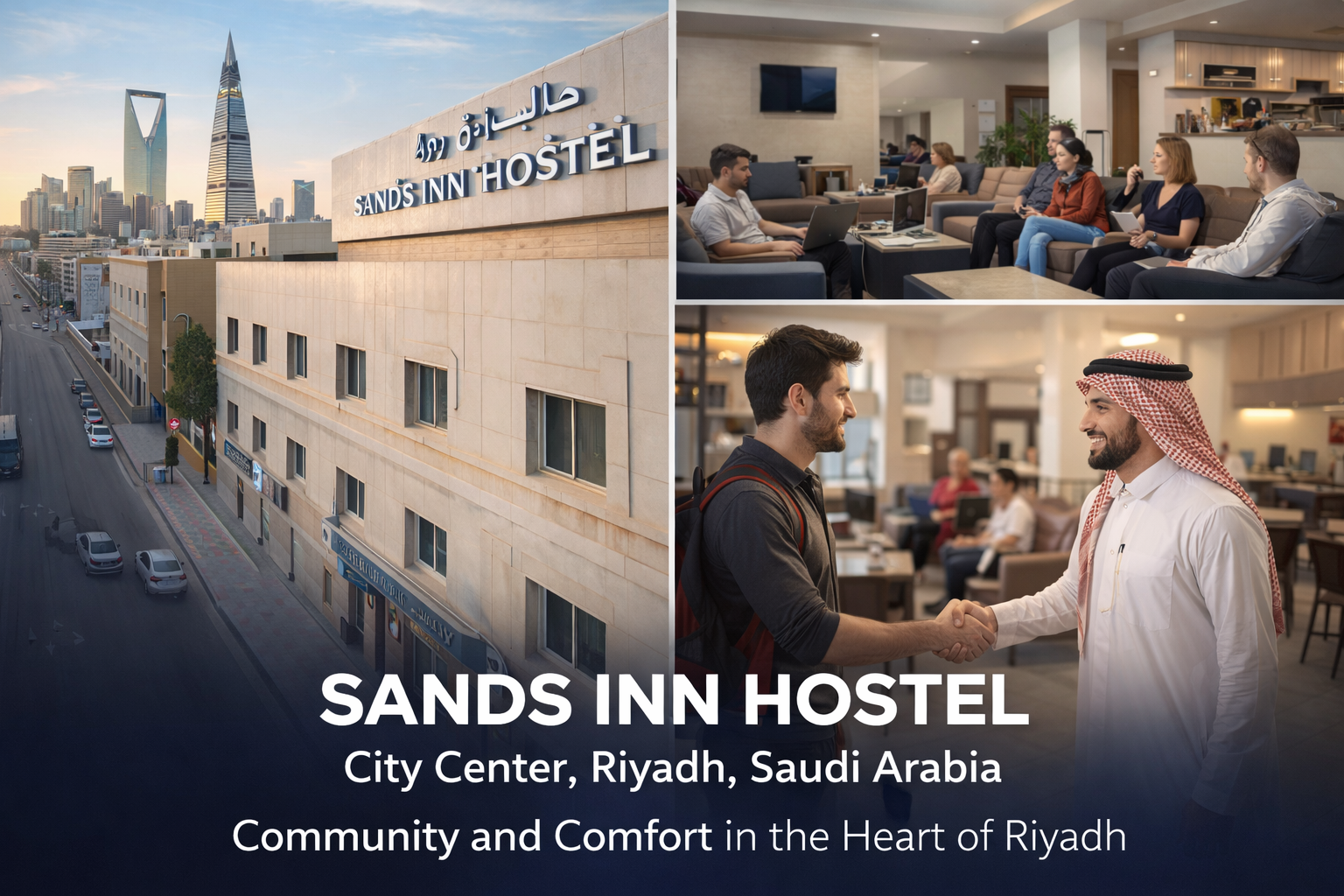
Sands Inn Hostel – City Center, Riyadh: A Human Story of Travel, Community, and Belonging
In a city as dynamic and rapidly evolving as Riyadh, accommodation options range from towering luxury hotels to modest guesthouses tucked into busy neighborhoods. Yet among these choices, Sands Inn Hostel – City Center stands out not because of extravagance, but because of its humanity. It represents a growing shift in how people experience Saudi Arabia’s capital: not from behind the walls of luxury isolation, but from within the shared rhythm of everyday city life.
Sands Inn Hostel is more than a budget stay. It is a place where travelers arrive with questions and leave with stories. It is where strangers become companions, where cultures intersect in shared kitchens, and where the essence of Riyadh becomes accessible to those who seek authenticity over opulence.
The Changing Face of Riyadh and Budget Travel
Riyadh has transformed dramatically over the past decade. Once viewed primarily as a governmental and business hub, the city now attracts tourists, digital nomads, entrepreneurs, and cultural explorers. Major infrastructure developments, expanding metro systems, international events, and cultural initiatives have positioned Riyadh as a destination in its own right.
As tourism grows, so does the need for diverse accommodation. Not every traveler seeks five-star luxury. Many are students, backpackers, remote workers, or professionals on extended stays who prioritize location, affordability, and social connection. Sands Inn Hostel – City Center answers that need.
Located in a central area of Riyadh, the hostel provides accessibility to transportation, supermarkets, cafés, and major attractions. For travelers navigating the city for the first time, that centrality is invaluable. Being able to step outside and immediately feel connected to the pulse of the city makes the experience less intimidating and far more immersive.
A First Impression That Feels Personal
Arriving at Sands Inn does not feel like entering a corporate property. The atmosphere is informal yet organized, simple yet welcoming. The check-in process is straightforward, but what guests often remember most is the warmth of the greeting. In a city that can initially feel vast and overwhelming, a friendly face at reception can make all the difference.
Many travelers arrive after long flights or bus rides. Some are visiting Saudi Arabia for the first time. Others are returning for work contracts or extended projects. The staff’s approach tends to be practical and helpful, offering guidance about nearby stores, transportation routes, and local customs. That first conversation often sets the tone for the entire stay.
Unlike large hotels where interactions are brief and transactional, hostels naturally foster longer, more meaningful exchanges. Guests ask questions. Staff respond with local insight. Information is shared not only about logistics, but about culture.
The Value of Shared Space
The defining feature of any hostel is its communal structure. At Sands Inn, shared spaces serve as the heart of the experience. The common lounge, shared kitchen, and relaxation areas create opportunities for organic interaction.
In the evenings, the kitchen becomes a microcosm of global culture. A traveler from Southeast Asia might prepare rice and vegetables while someone from Europe cooks pasta. A guest from North Africa may share tea traditions. Conversations begin with simple questions such as where are you from and evolve into discussions about culture, religion, language, and travel routes.
These shared moments matter. They transform accommodation into experience.
For solo travelers, this sense of community reduces isolation. Riyadh, with its wide boulevards and large commercial districts, can feel expansive and impersonal at first. Returning to a hostel environment where familiar faces greet you creates comfort and continuity.
Dormitory Living with Practical Comfort
Sands Inn Hostel offers dormitory-style rooms, often separated by gender in accordance with local cultural expectations. The layout prioritizes practicality: individual beds, secure lockers for personal belongings, and basic furnishings designed for functionality.
While it does not position itself as luxury accommodation, the emphasis on cleanliness and order is noticeable. Guests who choose budget lodging typically understand that perfection is not the goal. What matters is hygiene, safety, and restfulness. Reviews and guest experiences frequently highlight the balance between affordability and comfort.
The beds provide a place to recharge after long days exploring Riyadh’s museums, markets, malls, or business districts. Privacy within a shared environment is managed through thoughtful arrangement and personal storage options.
For many travelers, especially younger guests or long-term budget explorers, dormitory living is not a compromise but a preference. It allows for both affordability and companionship.
Location as a Gateway to the City
One of Sands Inn Hostel’s strongest assets is its central positioning. Being in the city center means guests can access public transport more easily, find nearby supermarkets, and explore local dining options without relying entirely on taxis.
Riyadh’s expanding metro system is a significant advantage for visitors. Proximity to transit helps guests move between historic districts, business hubs, and entertainment venues. From cultural landmarks such as the King Abdulaziz Historical Center to modern skyscrapers like Al Faisaliah Tower, the city’s contrasts become easily accessible.
The hostel’s surrounding neighborhood reflects everyday Riyadh life. Rather than being isolated in a luxury compound, guests witness daily routines: local shoppers, neighborhood cafés, prayer times shaping the rhythm of the day. This proximity to ordinary life creates a deeper understanding of Saudi culture.
Amenities That Surprise
For a budget hostel, Sands Inn includes amenities that exceed basic expectations. Features such as Wi-Fi access throughout the property are essential in the modern travel landscape. Guests rely on connectivity for remote work, communication with family, or navigation.
Some facilities, such as recreational areas or fitness options, add value to extended stays. For long-term guests working in Riyadh, having access to communal relaxation spaces can make the difference between a temporary shelter and a livable environment.
The shared kitchen is particularly significant. Dining out in Riyadh can range from inexpensive local eateries to upscale restaurants, but the option to cook provides both financial savings and cultural exchange. Grocery stores nearby allow guests to purchase ingredients and prepare meals according to their preferences or dietary needs.
Human Stories That Define the Space
Every hostel becomes a collection of stories. Sands Inn is no different.
There are business travelers who initially book for convenience but end up extending their stay because of the community atmosphere. There are backpackers exploring the Middle East who choose the hostel as an affordable base. There are expatriates beginning new employment contracts who stay temporarily while arranging permanent housing.
One guest might arrive knowing no one in the city and leave with contacts who become lifelong friends. Another may discover new perspectives on Saudi society through conversations with fellow travelers.
Even small gestures leave lasting impressions. A staff member helping a guest navigate a government office. A roommate sharing local transportation tips. A group organizing an informal outing to explore a nearby attraction.
These stories are not advertised features, yet they are the true value of the hostel experience.
Navigating Cultural Context
Traveling to Riyadh involves understanding a distinct cultural environment. Saudi Arabia maintains traditions rooted in Islamic values and social norms that may differ from Western or Asian contexts.
Hostels like Sands Inn often become informal learning spaces where cultural awareness develops naturally. Guests exchange information about dress codes, public behavior, prayer times, and local etiquette.
Rather than experiencing culture shock in isolation, travelers discuss their observations collectively. Questions are answered in a supportive environment. Misunderstandings are clarified. This shared process reduces anxiety and increases appreciation.
For many international visitors, staying at Sands Inn becomes part of their broader cultural education.
Affordability and Accessibility
Cost plays a significant role in accommodation choice. Riyadh, like many capital cities, can be expensive, particularly in business districts. Sands Inn Hostel provides an entry point for travelers who might otherwise find the city financially inaccessible.
Students attending conferences, job seekers attending interviews, and budget tourists exploring Saudi Arabia benefit from lower nightly rates. This accessibility aligns with broader trends in global travel, where affordability allows more diverse populations to explore new regions.
Budget accommodation democratizes travel. It allows individuals from different economic backgrounds to experience Riyadh firsthand.
Challenges and Realism
No accommodation is without imperfections. Hostels, by their nature, require flexibility and shared responsibility. Noise levels may vary depending on occupancy. Shared facilities demand cooperation. Maintenance is an ongoing process.
What distinguishes a meaningful hostel experience is not the absence of flaws but the willingness to address them. Constructive feedback from guests contributes to continuous improvement. In community spaces, mutual respect among guests also shapes the environment.
Travelers choosing hostel stays typically understand that part of the experience involves adaptability.
A Reflection of Modern Saudi Arabia
Sands Inn Hostel reflects broader changes within Saudi Arabia. As the country opens more to tourism and international engagement, new types of hospitality emerge. Hostels symbolize accessibility, openness, and youth culture.
They attract travelers who seek interaction rather than insulation. They encourage dialogue across nationalities. They represent a softer, more personal side of a city often associated primarily with government and business.
In this sense, Sands Inn is not only an accommodation provider but also a participant in Riyadh’s cultural evolution.
The Emotional Impact of Temporary Homes
Travel reshapes people. Temporary homes become part of memory landscapes. Years later, travelers may not remember every monument they visited, but they often remember where they stayed and whom they met.
Sands Inn Hostel becomes part of that narrative. It may represent a first visit to Saudi Arabia, a turning point in a career, or a transitional chapter between countries.
The emotional dimension of hospitality lies in creating spaces where people feel safe enough to rest and open enough to connect.
Conclusion
Sands Inn Hostel – City Center in Riyadh is not defined by luxury architecture or elaborate marketing. It is defined by human interaction, accessibility, and community.
It offers travelers a central location, practical comfort, and shared spaces that foster connection. It allows individuals from diverse backgrounds to experience Riyadh not as distant observers, but as temporary participants in its daily rhythm.
In a city undergoing rapid transformation, Sands Inn represents a grounded approach to hospitality. It demonstrates that meaningful travel does not depend on extravagance, but on connection. It reminds us that sometimes the most memorable journeys begin not in grand lobbies, but in shared kitchens and quiet conversations between strangers who become friends.