 The Palm Jumeirah Dubai: History, Development, Attractions, and Luxury Living
Introduction
The Palm Jumeirah is one of the most recognizable man made islands in the world and a major symbol of Dubai’s ambition, innovation, and rapid development. Located along the coastline of Dubai in the United Arab Emirates, this extraordinary destination is famous for its distinctive palm tree shape, luxury hotels, private residences, beautiful beaches, and impressive views of the Arabian Gulf.
The Palm Jumeirah was designed to expand Dubai’s coastline and create a new destination for tourism, residential living, entertainment, and business. Its development transformed the relationship between the city and the sea, providing space for resorts, apartments, villas, restaurants, and leisure facilities.
Today, Palm Jumeirah attracts visitors from different parts of the world. Tourists come to experience its luxury resorts, enjoy water activities, explore its restaurants, and admire the skyline of Dubai. Residents choose the island for its waterfront lifestyle, exclusive properties, and proximity to important areas of the city.
The Palm Jumeirah is more than a luxury destination. It represents a significant chapter in Dubai’s modern history and demonstrates how large scale engineering, real estate investment, and tourism development have shaped the emirate’s international identity.
The History of Palm Jumeirah
The history of Palm Jumeirah is connected to Dubai’s long term strategy to diversify its economy and strengthen its position as an international tourism and business destination. During the late twentieth century, Dubai began investing heavily in infrastructure, commercial developments, transportation, and hospitality.
Although oil contributed to the development of the United Arab Emirates, Dubai pursued additional economic opportunities through trade, real estate, tourism, aviation, and international investment. Expanding the coastline offered a way to create new areas for hotels, residential communities, and recreational activities.
The Palm Jumeirah project was developed by Nakheel, a major Dubai based real estate developer. Construction began during the early 2000s, marking the start of one of the most ambitious coastal development projects in the region.
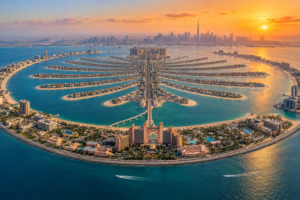
The island was designed in the shape of a palm tree, consisting of a central trunk, several crescent shaped and palm frond sections, and a surrounding crescent breakwater. This design was intended to increase the available coastline while creating distinct areas for residential and hospitality development.
The project received international attention because of its scale and unusual design. Building an artificial island required extensive marine engineering, sand placement, coastal protection, and infrastructure planning.
Palm Jumeirah gradually became a destination for luxury hotels and residential properties. As construction progressed, the island gained recognition as an important part of Dubai’s growing tourism industry.
The opening of major hotels and the development of residential communities helped establish Palm Jumeirah as a premium destination. Its international profile continued to increase as Dubai attracted more visitors, investors, and businesses.
The Design and Engineering of the Island
Palm Jumeirah’s palm tree design is its most distinctive characteristic. The central trunk connects the island to the mainland, while the fronds extend outward toward the sea. The crescent structure surrounding the island serves as a protective barrier and contributes to the overall shape of the development.
The engineering process involved moving large quantities of marine sand and rock. Sand was dredged from the seabed and placed in carefully planned locations to create the island’s land formations.
Satellite positioning technology and specialized marine construction equipment were used during the development process. Engineers needed to consider the placement of materials, the stability of the island, water movement, and coastal conditions.
The surrounding crescent breakwater was constructed to help protect the island from waves and reduce the effects of coastal erosion. Openings in the breakwater were incorporated to support water circulation within the surrounding area.
Building on reclaimed land creates unique engineering requirements. Developers must consider ground stability, settlement, infrastructure installation, and the long term performance of structures. Palm Jumeirah’s construction therefore involved more than simply adding sand to the sea. It required coordinated planning across marine engineering, transportation, utilities, architecture, and property development.
The island’s design also influenced how residents and visitors move around the destination. The trunk provides a primary connection to the mainland, while the fronds contain residential properties and other facilities. The crescent includes several hospitality developments and coastal attractions.
Palm Jumeirah has become an example of large scale coastal development. Its distinctive appearance has contributed to Dubai’s global image and made the island one of the city’s most frequently photographed locations.
Location and Accessibility
Palm Jumeirah is located along the Dubai coastline, close to several major commercial, residential, and tourism districts. Its position provides access to the Arabian Gulf while keeping residents and visitors within reach of central Dubai.
The island is connected to the mainland through road infrastructure and a monorail system. The Palm Monorail provides a dedicated transportation route along the island, connecting important destinations and offering visitors an alternative to road travel.
Road access allows residents, hotel guests, and tourists to travel by car or taxi. Dubai’s broader transportation network connects Palm Jumeirah with areas such as Dubai Marina, Jumeirah Beach Residence, and other parts of the city.
The Dubai Internet City and Dubai Media City districts are located within the wider surrounding area, while major roads connect the island to other parts of the emirate.
Dubai International Airport is accessible by road, although travel time depends on traffic conditions and the specific destination on the island. Al Maktoum International Airport is another airport serving the broader Dubai region.
Visitors can also use taxis and ride hailing services. Some hotels provide transportation services for guests, while public transport options vary depending on the travel route.
Accessibility is an important part of Palm Jumeirah’s appeal. Tourists can combine a visit to the island with other Dubai attractions, including shopping centers, beaches, entertainment venues, and cultural destinations.
The island’s location also provides opportunities to enjoy views of the Dubai skyline, the coastline, and the surrounding waters.
Luxury Hotels on Palm Jumeirah
Palm Jumeirah is widely associated with luxury hospitality. The island contains several high end hotels and resorts that offer accommodation, restaurants, swimming pools, private beach areas, and wellness facilities.
These hotels serve different types of travelers, including international tourists, families, couples, business visitors, and guests seeking premium leisure experiences.
One of the most prominent resorts on Palm Jumeirah is Atlantis The Palm. The resort is located at the crescent of the island and is recognized for its large scale hospitality facilities, marine themed attractions, restaurants, and entertainment options.
Atlantis The Palm has played an important role in establishing Palm Jumeirah as a global luxury tourism destination. Its architecture and waterfront location make it a major attraction for visitors.
Another well known property is Atlantis The Royal, a luxury resort located adjacent to Atlantis The Palm. The resort features high end accommodation, restaurants, swimming pools, and modern architectural design.
The island also includes properties such as Waldorf Astoria Dubai Palm Jumeirah, One and Only The Palm, and other hospitality developments. Each resort offers its own accommodation styles, facilities, dining experiences, and services.
Hotel prices vary depending on the season, room category, availability, and included services. Visitors should check official hotel websites or recognized booking platforms for current prices and reservation conditions.
Luxury resorts on Palm Jumeirah commonly offer services such as concierge assistance, spa treatments, beach access, fitness facilities, and dining options. Some facilities may be reserved for hotel guests or require separate bookings.
The growth of hospitality on the island has supported Dubai’s wider tourism sector. Hotels create employment opportunities in areas such as housekeeping, food and beverage, reception, maintenance, security, and management.
The hospitality industry also contributes to related businesses, including transportation providers, tour operators, restaurants, and retail services.
Residential Communities and Waterfront Living
Palm Jumeirah is not only a destination for tourists. It is also a residential community containing apartments, villas, penthouses, and luxury properties.
The island’s residential developments are designed to provide waterfront living and access to a range of leisure facilities. Many properties feature views of the sea, Dubai’s skyline, or the island’s distinctive landscape.
The fronds are particularly associated with private villas and residential properties. These locations offer different levels of privacy and access to the coastline, depending on the property and community.
Apartments are available in several parts of the island, including the trunk and other residential areas. Property types range from smaller apartments to larger luxury residences.
Residents may choose Palm Jumeirah because of its location, recreational facilities, hospitality services, and coastal environment. The island also contains restaurants, retail outlets, fitness centers, and other amenities.
The real estate market on Palm Jumeirah is influenced by several factors. These include property size, location, views, building facilities, age of the development, and market conditions.
Waterfront properties can have different maintenance requirements from properties located inland. Buyers and tenants should consider service charges, maintenance responsibilities, access arrangements, and ownership conditions before making a decision.
Palm Jumeirah has become an important part of Dubai’s luxury real estate market. Its unique design and limited land availability contribute to its distinct property profile.
The residential sector also supports employment in property management, maintenance, cleaning, security, landscaping, and other services.
Beaches and Water Activities
The beaches of Palm Jumeirah are among its most popular attractions. The island’s coastal location provides opportunities for swimming, sunbathing, water sports, and relaxing by the sea.
Many luxury hotels operate private beach areas for guests. These facilities may include sun loungers, beachside restaurants, swimming pools, and water activity services.
Public beach access varies across the island, so visitors should check the access policies of specific destinations before planning a visit.
Water activities available in and around Palm Jumeirah can include kayaking, paddleboarding, jet skiing, and boat tours, depending on the operator and weather conditions.
Boat trips provide opportunities to view the island from the water. Visitors can observe the palm shaped design, waterfront properties, hotels, and the Dubai skyline.
Some tour operators offer sightseeing cruises and private yacht experiences. Prices and services depend on the length of the trip, type of vessel, departure point, and package selected.
Safety is an important consideration during water activities. Visitors should follow operator instructions, use appropriate safety equipment, and consider sea conditions before entering the water.
Dubai’s climate allows outdoor activities throughout much of the year, although summer temperatures can be extremely high. Many travelers prefer visiting beaches and participating in outdoor activities during the cooler months.
The coastal environment is a central part of Palm Jumeirah’s identity. It supports the island’s tourism industry and contributes to the lifestyle offered by waterfront residential communities.
Dining and Culinary Experiences
Palm Jumeirah offers a wide selection of dining experiences. Restaurants are located inside hotels, along the waterfront, and within residential and commercial developments.
The dining scene includes international cuisine, seafood, casual restaurants, fine dining, and cafes. Visitors can find different styles of food depending on their budget and preferences.
Luxury hotels often operate restaurants managed by international hospitality groups or independent culinary brands. These establishments may focus on specific cuisines, chef led menus, or distinctive dining environments.
Waterfront restaurants are popular because they provide views of the sea and surrounding developments. Some offer outdoor seating, while others operate primarily indoors.
Visitors should check restaurant opening hours, reservation requirements, dress codes, and menu prices before visiting. Some high end restaurants require advance reservations, particularly during busy periods.
Dining prices vary significantly. Casual meals may be available at lower prices, while luxury restaurants and specialty dining experiences can involve substantially higher costs.
The island’s food and beverage industry creates employment opportunities for chefs, kitchen assistants, servers, restaurant managers, reception staff, and cleaning teams.
Tourism contributes to restaurant demand, while residential communities provide a local customer base. This combination supports a varied dining environment.
Palm Jumeirah’s restaurants also contribute to Dubai’s broader reputation as an international culinary destination. Visitors can experience different cuisines without traveling far from the island.
Entertainment and Family Attractions
Palm Jumeirah provides a variety of entertainment opportunities for families, couples, and individual travelers.
Atlantis The Palm is home to major attractions, including Aquaventure Waterpark and The Lost Chambers Aquarium. These facilities offer different experiences related to water recreation and marine life.
Aquaventure Waterpark includes water slides, pools, and recreational facilities. The attraction has become one of the most recognized water parks in the region.
The Lost Chambers Aquarium provides visitors with opportunities to observe marine animals in an aquarium environment. The attraction is connected to the marine themed identity of the Atlantis resort.
Visitors should check the official attraction websites for operating hours, ticket prices, age restrictions, and access requirements. Conditions may change depending on maintenance, special events, or seasonal arrangements.
Other entertainment options on Palm Jumeirah include beach clubs, hotel facilities, restaurants, and organized tours.
The island’s proximity to Dubai Marina and other entertainment districts allows visitors to combine different activities during their stay. Depending on traffic and transportation options, tourists can travel between several destinations in the same day.
Family travel planning may require consideration of children’s ages, weather conditions, transportation, and the length of activities. Some attractions are more suitable for specific age groups or physical abilities.
Palm Jumeirah’s entertainment industry supports the wider tourism economy by attracting visitors who spend money on admission tickets, food, accommodation, transportation, and other services.
Architecture and Urban Development
The architecture of Palm Jumeirah combines modern residential buildings, luxury resorts, commercial facilities, and waterfront structures.
The island contains properties designed in different architectural styles. Some buildings emphasize contemporary design, while others incorporate elements associated with traditional luxury hospitality.
Large hotels often use distinctive architectural features to establish their visual identity. These may include expansive entrances, landscaped gardens, swimming pools, and views toward the sea.
Residential developments vary in height, layout, and building design. Apartment buildings provide different property sizes, while villas offer alternative living arrangements.
Urban development on reclaimed land requires careful infrastructure planning. Roads, water systems, electricity, drainage, telecommunications, and other services must be integrated into the development.
The design of Palm Jumeirah also involves landscape planning. Green spaces, planted areas, pedestrian routes, and outdoor facilities contribute to the environment of the island.
Architectural development continues to change as new projects are introduced, existing buildings are renovated, and commercial facilities expand.
Dubai’s construction industry has played a significant role in the creation of Palm Jumeirah. The island’s development involved contractors, engineers, architects, property developers, and service providers.
The built environment reflects Dubai’s broader approach to large scale urban development. The city has invested in major infrastructure and real estate projects to support population growth, tourism, and economic activity.
At the same time, coastal construction requires attention to environmental conditions, long term maintenance, and the effects of development on marine ecosystems.
Tourism and Economic Importance
Palm Jumeirah contributes to Dubai’s tourism and real estate industries. Its hotels, restaurants, attractions, and residential communities create economic activity across several sectors.
Tourists visiting the island spend money on accommodation, food, transportation, entertainment, and shopping. This spending supports businesses and employment.
The hospitality sector provides jobs in hotel operations, housekeeping, food preparation, customer service, security, engineering, and administration.
Construction and property management also support employment. Buildings require regular maintenance, cleaning, repairs, landscaping, and facility management.
The island’s international reputation contributes to Dubai’s branding as a luxury tourism destination. Images of Palm Jumeirah frequently appear in travel materials, promotional campaigns, and media coverage.
Real estate investment is another important part of the island’s economy. Property sales and rentals generate business for developers, brokers, property managers, and service providers.
Market conditions can change over time. Property values, rental prices, tourism demand, and hotel occupancy depend on factors such as economic conditions, supply, international travel, and investor confidence.
Palm Jumeirah is part of a broader network of Dubai developments that includes Downtown Dubai, Dubai Marina, Business Bay, and other major districts.
Together, these areas contribute to the city’s economic diversification and international appeal.
Environmental Considerations
The development of Palm Jumeirah involved significant changes to the marine environment. Artificial island construction can affect water circulation, seabed conditions, marine habitats, and coastal processes.
Large scale dredging and land reclamation require environmental planning and monitoring. Developers and authorities must consider how construction activities influence surrounding ecosystems.
The crescent breakwater was designed to provide coastal protection while openings help support water exchange. Water circulation is an important consideration in enclosed or partially protected marine environments.
Environmental management is relevant to the long term sustainability of coastal developments. Factors such as water quality, waste management, energy use, and marine ecosystem protection require ongoing attention.
Hotels and residential properties also produce environmental impacts through electricity consumption, water use, waste generation, transportation, and landscaping.
Sustainability initiatives in the hospitality and property sectors can include energy efficiency, water conservation, waste reduction, and responsible resource management. The specific measures available vary between developments.
Dubai faces environmental challenges related to its desert climate, including high temperatures, water demand, and energy consumption. Coastal projects must operate within these wider conditions.
The future management of Palm Jumeirah involves balancing tourism, residential development, economic activity, and environmental responsibilities.
Understanding the environmental aspects of artificial islands helps explain the complexity of coastal urban development. Engineering achievements and environmental management must be considered together when evaluating long term development.
The Best Time to Visit Palm Jumeirah
Palm Jumeirah can be visited throughout the year, but weather conditions influence outdoor activities and travel comfort.
The cooler months, generally from November through March, are popular with tourists. During this period, temperatures are often more comfortable for sightseeing, beach activities, outdoor dining, and boat tours.
The summer months can bring very high temperatures and humidity. Visitors may prefer indoor attractions, hotel swimming facilities, and activities scheduled during the cooler parts of the day.
Travel demand can influence accommodation prices and attraction availability. Visitors should compare different dates and make reservations according to their budgets and plans.
The best time to visit depends on individual preferences. Travelers who prioritize beach activities may prefer milder weather, while those focused on indoor entertainment may have more flexibility.
Visitors should also consider religious holidays, major events, school holidays, and seasonal tourism demand when planning a trip.
Weather conditions can change, so travelers should check current forecasts before participating in outdoor activities.
Planning ahead can help visitors organize transportation, dining reservations, attraction tickets, and accommodation.
Accommodation Options
Accommodation on Palm Jumeirah ranges from luxury resorts to serviced apartments and residential rental properties.
Luxury hotels provide rooms and suites with different facilities and price categories. Some properties offer private beach access, restaurants, swimming pools, and spa services.
Serviced apartments may be suitable for travelers who prefer additional living space or longer stays. Available services depend on the building and accommodation provider.
Hotel prices vary according to room size, travel dates, demand, facilities, and booking conditions. Visitors should review cancellation policies and additional charges before confirming a reservation.
Travelers should choose accommodation based on their planned activities and transportation needs. A property near a specific attraction may be convenient, while another location may be more suitable for exploring other parts of Dubai.
Families may consider room size, children’s facilities, swimming pools, and nearby dining options. Business travelers may prioritize transportation access and work facilities.
Visitors should book through official hotel websites or reputable booking platforms. It is important to confirm that the selected property is located on Palm Jumeirah and to review the exact room details.
Accommodation quality and services can differ significantly between properties, even when they are located in the same general area.
Palm Jumeirah as a Real Estate Destination
Palm Jumeirah is one of Dubai’s recognized luxury property markets. Its residential developments attract buyers and renters seeking waterfront homes and access to premium facilities.
Property types include apartments, villas, penthouses, and other residential units. Prices depend on location, size, views, building quality, and market conditions.
Some properties offer direct beach access, while others provide views of the sea or Dubai’s skyline. The available features depend on the development.
Investors should research ownership rules, transaction costs, maintenance fees, rental regulations, and property management requirements before purchasing.
The Dubai property market is subject to changes in supply, demand, economic conditions, and government regulations. Property investment involves financial risks and requires careful evaluation.
Real estate agents can provide information about available properties, but buyers should independently verify important details and obtain professional advice when necessary.
Rental properties may appeal to people who want to experience waterfront living without purchasing a home. Rental costs vary according to property characteristics and contract terms.
The island’s combination of tourism facilities, residential communities, and coastal views makes it a distinctive part of Dubai’s real estate landscape.
Transportation Around the Island
Transportation is an important consideration for visitors and residents of Palm Jumeirah.
The Palm Monorail operates along the island and connects key locations. Its route provides a practical option for some visitors and offers views of the surrounding development.
Taxis and ride hailing services are also available in Dubai. Travel times depend on the location, traffic conditions, and time of day.
Private vehicles are commonly used by residents and hotel guests. Parking arrangements differ between buildings, hotels, restaurants, and attractions.
Walking may be suitable for certain areas, although the distance between destinations and outdoor temperatures can affect comfort.
Visitors should consider transportation when planning a day on the island. Some attractions are located far apart, and travel times may be longer during busy periods.
Public transport information and service conditions should be checked through official sources before traveling.
The island’s transportation infrastructure supports its residential and tourism functions. Continued development may influence mobility and accessibility in the future.
The Future of Palm Jumeirah
Palm Jumeirah continues to form part of Dubai’s evolving urban landscape. New hospitality facilities, residential projects, commercial services, and entertainment offerings may influence the island’s future.
Dubai’s development strategy emphasizes tourism, real estate, international business, and infrastructure. Palm Jumeirah remains connected to these broader economic objectives.
Future development requires attention to population growth, transportation, environmental management, and the maintenance of existing infrastructure.
As visitor expectations change, hotels and attractions may introduce new services and experiences. The luxury tourism industry continues to adapt to different customer preferences and international market conditions.
Residential developments may also change as properties are renovated, new facilities are introduced, and demand evolves.
The long term future of Palm Jumeirah will depend on several factors, including Dubai’s economic performance, tourism demand, investment activity, environmental conditions, and development policies.
The island’s established identity provides a foundation for continued tourism and residential activity. However, ongoing maintenance and responsible planning are important for preserving its functionality and attractiveness.
Palm Jumeirah’s future should be understood within the wider development of Dubai and the United Arab Emirates.
Practical Advice for Visitors
Visitors planning a trip to Palm Jumeirah should research their destinations in advance. The island contains many different hotels, restaurants, attractions, and residential areas, each with its own access arrangements.
Travelers should confirm opening hours, ticket prices, reservation requirements, and transportation options before visiting.
Weather preparation is particularly important. During hot periods, visitors should plan outdoor activities carefully and use appropriate sun protection.
People participating in water activities should follow safety instructions and select reputable operators.
Visitors should respect hotel rules, private property restrictions, and beach access policies. Not all areas of the island are open to the public.
Budget planning can help travelers manage accommodation, transportation, dining, and attraction expenses. Prices differ considerably across the island.
Tourists should also consider combining Palm Jumeirah with other Dubai destinations. The city offers shopping centers, cultural attractions, parks, entertainment venues, and historic neighborhoods.
A well organized itinerary allows visitors to experience different parts of Dubai while reducing unnecessary travel.
Travelers should rely on official sources for current information about attraction access, transportation services, and hotel policies.
Conclusion
Palm Jumeirah is one of Dubai’s most distinctive developments and an important symbol of the city’s modern transformation. Its palm shaped design, luxury hotels, waterfront residences, beaches, and entertainment facilities have established it as a major international destination.
The island’s history reflects Dubai’s investment in tourism, real estate, engineering, and economic diversification. Its construction required extensive marine engineering and infrastructure planning, creating a complex coastal development.
Today, Palm Jumeirah serves multiple purposes. It is a home for residents, a destination for tourists, a location for luxury hospitality, and a significant part of Dubai’s real estate market.
Visitors can enjoy a variety of experiences, from relaxing on beaches and dining at waterfront restaurants to exploring marine attractions and staying at internationally recognized resorts.
The island also presents important considerations related to environmental management, transportation, infrastructure, and long term development.
Palm Jumeirah’s continued significance will depend on how Dubai manages tourism, residential growth, infrastructure, and coastal responsibilities. Its development remains closely connected to the wider story of Dubai as a global city.
For travelers, Palm Jumeirah offers an opportunity to experience the combination of architecture, luxury, recreation, and coastal scenery that has become associated with modern Dubai. For the city itself, the island represents an ambitious development project that has influenced its international image and urban identity.