 The History and Development of Burj Al Arab Jumeirah
The story of Burj Al Arab Jumeirah is closely connected to Dubai’s development as a major international destination. During the 1990s, Dubai was pursuing ambitious projects designed to strengthen its position in tourism, business, trade, and international investment. The development of a landmark luxury hotel was part of this broader vision.
Burj Al Arab Jumeirah officially opened in 1999. Its design was intended to create a recognizable symbol for Dubai, one that could stand alongside famous architectural landmarks around the world. The hotel was developed as a statement of confidence in the city’s future and its ability to attract visitors seeking exceptional experiences.
The building’s name translates approximately to Tower of the Arabs. Its identity draws on the maritime history of the region, particularly the traditional dhow sailing vessels that have long been associated with Arabian Gulf communities.
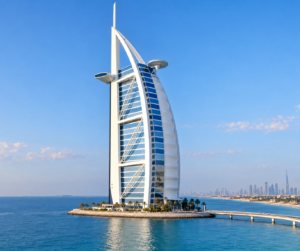
Rather than adopting a conventional rectangular hotel design, the architects developed a structure that resembles a large sail rising from the sea. This concept connected the building to the area’s maritime heritage while giving Dubai a visually distinctive landmark.
Over the years, Burj Al Arab has become closely associated with Dubai’s luxury hospitality sector. Its reputation has been shaped by its architecture, interior design, guest services, and international media exposure. The hotel continues to operate as part of Jumeirah’s luxury hotel portfolio.
Location and Coastal Setting
Burj Al Arab Jumeirah is located along Jumeirah Street in Dubai, United Arab Emirates. The hotel stands on a man made island approximately 280 meters from the coastline and is connected to the mainland by a private curved causeway.
Its position on the Arabian Gulf gives the hotel a distinctive relationship with the sea. Guests can experience views of the coastline, open water, and Dubai’s surrounding urban environment. The location also places the property within reach of several well known attractions and destinations in the Jumeirah area.
The hotel’s offshore setting was an important element of its original concept. The structure was designed to appear as though it were rising directly from the water, creating a visual impression that differs from most traditional city hotels.
The coastal environment is also central to the guest experience. The hotel includes beach facilities, pools, dining venues, and outdoor areas that allow visitors to enjoy Dubai’s climate and seaside surroundings.
Travelers staying at Burj Al Arab can explore different parts of Dubai, including nearby beaches, shopping destinations, cultural attractions, and business districts. The exact travel time to attractions depends on traffic conditions and the destination.
For visitors arriving in Dubai, the hotel is accessible by road from the wider city. Guests should confirm transportation arrangements, access policies, and any booking requirements before visiting. The official hotel address is Jumeirah Burj Al Arab, Jumeirah Street, Dubai, UAE.
Architectural Design and Engineering
The architecture of Burj Al Arab Jumeirah is one of its most important characteristics. Designed by architect Tom Wright of WS Atkins, the building takes inspiration from the sail of an Arabian dhow. Its exterior combines a strong geometric profile with a fabric like facade that gives the structure its recognizable appearance.
The hotel rises approximately 321 meters above the coastline. Its height, location, and distinctive shape allow it to be recognized from various viewpoints around Dubai.
Creating the hotel on an offshore island presented substantial engineering challenges. The artificial island had to be constructed and stabilized before the main building could be developed. According to Jumeirah’s official history, more than 230 concrete piles were used in the island’s foundation, extending approximately 40 meters into the seabed.
The building’s structure was designed to withstand the environmental conditions associated with its coastal location. Wind, sea conditions, and the stability of the foundations were important considerations during construction.
The offshore island and connecting causeway contribute to the hotel’s sense of separation from the mainland. At the same time, the design maintains a strong visual relationship with Dubai’s shoreline.
The architecture demonstrates how engineering and design can work together to produce a building that serves both practical and symbolic purposes. Burj Al Arab was created to function as a hotel while also becoming an internationally recognizable landmark.
Interior Design and Luxury Atmosphere
The interior of Burj Al Arab Jumeirah was developed to create a dramatic and highly decorative environment. While the exterior is defined by its sail shaped profile, the interior emphasizes large spaces, rich materials, bold colors, and elaborate details.
One of the most recognizable interior features is the hotel’s large atrium. The atrium rises more than 180 meters and creates an impressive vertical space within the building. Its scale contributes to the theatrical feeling that guests experience upon entering the property.
The interior design incorporates influences associated with Arabian aesthetics alongside contemporary luxury. Decorative surfaces, geometric patterns, and carefully selected materials contribute to the overall visual identity of the hotel.
Jumeirah states that the interiors use more than 30 types of Statuario marble, while approximately 1,790 square meters of 24 carat gold leaf are incorporated into interior surfaces. The hotel also includes decorative features using Swarovski crystals.
These materials and finishes are intended to create an environment that feels distinctive rather than ordinary. The design is not limited to guest rooms but extends through public spaces, restaurants, lounges, and other areas of the property.
The interior also reflects the hotel’s emphasis on visual storytelling. Guests encounter different materials, colors, textures, and architectural elements throughout their journey inside the building.
Luxury in this context is presented through both physical comfort and the surroundings in which that comfort is delivered. The design seeks to make the experience of staying at Burj Al Arab memorable from the moment guests arrive.
Accommodation and Suite Experience
Burj Al Arab Jumeirah operates as an all suite luxury hotel. Unlike a conventional property that offers standard guest rooms, the hotel provides spacious duplex suites designed to create a residential style accommodation experience.
According to the hotel’s official overview, the property includes 198 luxury duplex suites. The suites are arranged across two levels, providing a greater sense of separation between different areas of the accommodation.
The layout and design of the suites vary, and guests can select accommodation according to their preferences, available categories, and booking conditions. Some suites provide views of the Arabian Gulf, while others overlook areas of the resort.
The hotel also offers Royal Suites for guests seeking a particularly luxurious accommodation category. Specific amenities, room layouts, and included services depend on the selected suite and booking arrangement.
A central part of the accommodation experience is personalized service. The hotel is known for its butler service, which is designed to assist guests with various requests during their stay.
This approach means that accommodation is presented as more than a place to sleep. The suite, service, views, and additional facilities form part of a complete hospitality experience.
Travelers considering a stay should review the official accommodation descriptions carefully. Suite sizes, amenities, access conditions, and rates can vary, and current details should be confirmed directly with the hotel before making a reservation.
For people planning a special vacation, honeymoon, anniversary, or luxury travel experience, the all suite format may be an important factor in deciding whether the hotel suits their needs.
Personalized Hospitality and Butler Service
Personalized service is a major component of the Burj Al Arab Jumeirah brand. The hotel has long promoted a hospitality approach that emphasizes individual attention, comfort, and convenience.
Butler service is one of the features associated with the guest experience. A dedicated butler can assist with certain guest needs, depending on the service arrangements and hotel policies.
This model of hospitality is different from a standard hotel experience in which guests primarily interact with reception staff and request services as needed. Butler service is intended to provide a more personal point of contact throughout the stay.
The hotel’s welcome traditions also draw on Arabian hospitality. Jumeirah describes a Marhaba welcome that includes elements such as rose water, cold towels, dates, and Arabic coffee.
These details help connect the guest experience to regional traditions of welcoming visitors. At the same time, the hotel presents these customs within a contemporary luxury environment.
High end hospitality depends on many different teams working together. Front office staff, housekeeping employees, food and beverage professionals, concierge teams, engineering personnel, and management all contribute to the daily operation of a luxury property.
The guest experience therefore involves much more than the visible architecture. Consistency, communication, cleanliness, responsiveness, and attention to detail are all important elements of hotel service.
Visitors should understand that specific services may depend on their reservation category and the hotel’s current policies. It is advisable to confirm available amenities and arrangements before arrival.
Dining at Burj Al Arab Jumeirah
Dining is another major part of the Burj Al Arab Jumeirah experience. The hotel offers a range of restaurants and lounges designed around different culinary styles, atmospheres, and settings.
Its dining venues include restaurants associated with fine dining, Mediterranean cuisine, Arabian hospitality, and contemporary luxury. The selection allows guests to choose different experiences during their visit.
Al Muntaha is one of the hotel’s best known dining venues. Located high within the building, the restaurant is associated with panoramic views of the Arabian Gulf and Dubai’s coastline. Jumeirah identifies Al Muntaha as a Michelin starred restaurant.
The restaurant’s elevated location makes the surrounding scenery an important part of the dining experience. Guests can enjoy the combination of cuisine, interior design, and views from the upper levels of the hotel.
Al Mahara offers a different atmosphere. It is associated with an aquarium setting that creates an underwater inspired environment for diners. The restaurant’s design contributes to a dining experience that combines food with visual presentation.
Al Iwan provides an atmosphere influenced by Arabian hospitality and decorative interiors. Its menu and service style are designed to reflect the broader identity of the hotel.
SAL offers a Mediterranean focused dining experience in a more relaxed setting near the hotel’s beach facilities. Its location provides guests with an alternative to formal dining spaces.
The hotel also includes lounges and other venues where visitors can enjoy refreshments, afternoon tea, and signature beverages. Sahn Eddar is known for its atrium setting and afternoon tea experience.
Dining options, menus, operating hours, and reservation requirements can change. Guests should check the official hotel website for current information before planning a meal.
Wellness, Spa, and Fitness Facilities
Wellness facilities are an important part of the services offered at Burj Al Arab Jumeirah. Luxury travelers often look for opportunities to relax and maintain personal routines during their stay, and the hotel provides facilities designed to support these needs.
Talise Spa is associated with the hotel’s wellness offering. The property includes spa facilities and treatment spaces intended to provide guests with opportunities for relaxation and personal care.
The official hotel overview describes a spa with 14 treatment rooms and separate ladies only and mixed facilities. These arrangements are designed to support privacy and different guest preferences.
The hotel also provides fitness facilities through Talise Fitness. Guests can explore available exercise and wellness services as part of their stay, subject to access arrangements and current operating policies.
Wellness experiences can be especially relevant for travelers who combine business and leisure. After spending time in meetings, exploring the city, or traveling long distances, guests may want to use spa or fitness facilities as part of their daily routine.
The overall wellness experience depends on the treatment selected, the availability of facilities, and the individual preferences of each guest. Visitors should confirm booking requirements and service availability in advance.
The hotel also includes outdoor facilities associated with leisure and relaxation. These facilities contribute to the broader resort experience, allowing guests to spend time away from their suites while enjoying the coastal setting.
Beach Facilities and Outdoor Experiences
Burj Al Arab Jumeirah offers outdoor facilities that complement its luxury accommodation and dining experiences. The hotel’s coastal location provides opportunities for guests to enjoy the sea and outdoor environment.
The official hotel overview describes private beach access, two beach clubs, and two temperature controlled outdoor pools surrounded by 32 air conditioned cabanas.
These facilities provide different options for relaxation. Guests can spend time near the beach, use the pools, or enjoy the comfort of cabanas while taking a break from indoor spaces.
Outdoor facilities are particularly relevant in Dubai, where visitors often plan their schedules around the weather and time of day. During warmer periods, shaded spaces and temperature controlled facilities can make outdoor leisure more comfortable.
The hotel experience is designed to combine the privacy of luxury accommodation with access to resort amenities. This allows guests to structure their stay according to their interests, whether they prefer quiet relaxation, dining, wellness, or sightseeing.
Access to certain facilities may vary depending on the reservation type, seasonal conditions, maintenance schedules, and hotel policies. Guests should confirm the current conditions before arrival.
For travelers who want to experience Dubai’s coastal environment without staying at a conventional beach resort, Burj Al Arab provides a combination of accommodation, dining, and outdoor facilities in one property.
The Importance of the Hotel to Dubai Tourism
Burj Al Arab Jumeirah has played a significant role in the international image of Dubai. Its architecture became recognizable to audiences around the world, helping establish a visual association between Dubai and luxury tourism.
The hotel opened in 1999, during a period when Dubai was developing major tourism and infrastructure projects. Its distinctive appearance helped communicate the city’s ambition and its interest in creating internationally recognized destinations.
Landmark hotels can influence tourism in several ways. They can attract visitors who want to experience a particular property, encourage photography and media coverage, and contribute to the identity of a destination.
Burj Al Arab has also become a reference point in discussions about luxury hospitality. Its all suite accommodation, design, service model, and dining venues have helped establish its position within the premium hotel market.
The building is often associated with Dubai’s broader development as a global destination. However, the city’s tourism sector includes a wide range of accommodation types, from budget hotels and serviced apartments to business hotels, family resorts, and other luxury properties.
This diversity is important because travelers have different budgets, preferences, and reasons for visiting. Burj Al Arab represents one segment of Dubai’s hospitality industry, particularly the high end luxury market.
The hotel’s significance can therefore be understood both as a landmark and as an operating hospitality business. Its architectural identity attracts attention, while its services and facilities support the daily needs of guests.
The hotel continues to be part of Jumeirah’s collection of luxury properties, which includes accommodation and dining destinations in Dubai and other international markets.
Sustainability and Marine Conservation
Luxury hospitality is increasingly connected to environmental responsibility and conservation. Hotels located near coastal ecosystems have opportunities to participate in initiatives that support marine life and environmental awareness.
Burj Al Arab Jumeirah is associated with the Dubai Turtle Rehabilitation Project. The initiative provides care for rescued sea turtles and supports their rehabilitation before release when appropriate.
According to Jumeirah, the project has returned more than 2,000 rescued turtles to the Arabian Gulf. This is an example of how a hotel property can be connected to conservation activity beyond its primary accommodation and hospitality functions.
Marine conservation is relevant to Dubai because the emirate’s coastal environment supports a range of marine species and ecosystems. Protecting wildlife and raising awareness can contribute to broader environmental understanding.
The turtle rehabilitation project also gives guests an opportunity to learn about marine animals and the challenges they face. The availability of experiences and access should be confirmed with the hotel.
Environmental initiatives should be considered alongside the broader operational responsibilities of a luxury hotel. Energy use, water consumption, waste management, building maintenance, and resource efficiency are all relevant topics for hospitality businesses.
Information about specific sustainability programs, current practices, and conservation activities should be obtained from official sources, since initiatives and operational details can change over time.
The Hotel’s Iconic Helipad
The helipad at Burj Al Arab Jumeirah has become a recognizable feature of the building. Located high above the sea, it has been used for a range of events and publicized activities.
The helipad contributes to the hotel’s international visibility because its unusual location provides a dramatic setting for photography and special occasions. Images of activities taking place on the helipad have appeared in global media coverage.
The feature also reflects the way Burj Al Arab combines functional infrastructure with architectural spectacle. A facility associated with transportation has become part of the building’s public identity.
Visitors should not assume that the helipad is open for general access or that special events are available to all guests. Activities, access arrangements, and permissions depend on the hotel’s policies and event planning.
The helipad is one example of how a building can develop cultural significance beyond its original function. Over time, certain spaces become associated with memorable images and events, strengthening the recognition of the property.
For travelers interested in photography, architecture, or the history of Dubai’s landmarks, the helipad is a notable feature of the hotel. However, viewing opportunities depend on location, access, and current arrangements.
Planning a Visit to Burj Al Arab Jumeirah
Travelers interested in visiting Burj Al Arab Jumeirah should begin by deciding what type of experience they want. The hotel can be relevant to guests seeking accommodation, dining, wellness services, or a special luxury travel experience.
The first consideration is whether to stay at the hotel or visit for a specific activity. Accommodation offers access to a broader range of hotel services, while dining and other experiences may be subject to separate booking arrangements.
Visitors should review the official website for current information about reservations, available experiences, access policies, and operating hours. Some facilities may require advance reservations or be limited to particular guests.
Budget is another important consideration. Burj Al Arab is positioned in the luxury hospitality market, and the total cost of a visit depends on the selected suite, travel dates, dining arrangements, and additional services.
Travelers should review the complete booking information rather than relying on advertised starting prices alone. Taxes, fees, transportation, meals, and optional services may affect the total expense.
It is also important to consider the weather. Dubai can experience high temperatures during parts of the year, and visitors planning outdoor activities should take the season into account.
For international travelers, travel documentation, entry requirements, and transportation arrangements should be checked through appropriate official sources. Hotel reservations do not automatically establish eligibility to enter the United Arab Emirates.
A well planned visit can help travelers make better use of the hotel’s facilities while avoiding misunderstandings about access, costs, and available services.
Burj Al Arab and Luxury Hospitality Careers
Burj Al Arab Jumeirah is also relevant to people interested in careers in the hotel and hospitality industry. Operating a luxury hotel requires employees across many departments, with different skills and responsibilities.
Potential hospitality career areas include front office operations, housekeeping, food and beverage service, culinary operations, guest relations, concierge services, spa operations, engineering, security, and management.
The responsibilities of hotel employees vary depending on their department and position. Front office employees may assist with guest arrivals, reservations, and customer requests. Housekeeping teams support cleanliness and room preparation. Food and beverage staff work in restaurants, lounges, and service areas.
Luxury hotels often place particular emphasis on communication, professionalism, service consistency, and attention to detail. Employees may interact with guests from different cultural backgrounds and need to maintain a high standard of hospitality.
People interested in working at Burj Al Arab should use official Jumeirah career channels and verified recruitment sources. They should check the exact job title, location, employment conditions, and application process before submitting personal information.
Applicants should also be cautious of recruitment scams. No applicant should assume that a social media advertisement or third party message represents an official hotel vacancy.
The hospitality industry offers opportunities for people with different backgrounds and levels of experience, but requirements depend on the role. Some positions may require professional qualifications, language skills, relevant experience, or specific technical knowledge.
A career at a luxury hotel can involve demanding schedules, teamwork, and direct customer service. Candidates should evaluate the actual job description and employment terms carefully.
Restoration and the Future of Burj Al Arab
In April 2026, Jumeirah announced a phased restoration program for Burj Al Arab Jumeirah. The stated purpose of the program is to preserve the hotel’s architectural and interior legacy while enhancing selected elements of the property.
The announcement describes the restoration as a careful process intended to protect the building’s distinctive identity. French architect Tristan Auer is associated with the restoration approach, which focuses on refinement rather than completely replacing the hotel’s existing design language.
The announcement emphasizes the preservation of features including gold leaf, marble, and Swarovski crystal elements. It also describes the intention to introduce improvements in comfort and discreet technology while maintaining the character of the property.
Restoration is relevant to a landmark hotel because buildings of this scale require ongoing maintenance and renewal. Materials, interior finishes, technology, and guest facilities may need attention as a property continues operating over many years.
The challenge is to maintain the features that make a building recognizable while ensuring that it remains functional for contemporary guests. This involves decisions about design, construction, operations, and the protection of existing craftsmanship.
The long term outcome of a restoration program depends on the scope of the work, the implementation schedule, and the operational decisions made by the property. Travelers should consult official announcements for updates that may affect particular facilities or experiences.
The restoration announcement demonstrates that Burj Al Arab is being treated not only as an operating hotel but also as an architectural property with an enduring public identity.
Why Burj Al Arab Remains Recognizable
The continued recognition of Burj Al Arab Jumeirah can be understood through several connected elements. Its sail shaped exterior provides a distinctive visual identity, while its offshore location makes it different from many conventional hotels.
The property’s luxury positioning also contributes to its reputation. The all suite accommodation, personalized service, fine dining, and elaborate interiors create an experience aimed at travelers seeking premium hospitality.
Its connection to Dubai’s development gives the hotel additional significance. The building became a recognizable symbol during a period when the city was strengthening its position as an international destination.
The hotel has also received substantial media attention over the years. Its architecture and publicized events have contributed to its visibility among international travelers.
Recognition does not mean that the hotel is suitable for every visitor. Travelers have different expectations regarding cost, location, accommodation style, facilities, and travel priorities.
Some visitors may be interested in experiencing the architecture through a dining reservation or other permitted visit. Others may prefer to stay at a different property and explore Dubai’s wider range of attractions.
Understanding the hotel’s characteristics allows travelers to make decisions based on their own needs rather than relying only on its reputation.
Conclusion
Burj Al Arab Jumeirah is a major landmark in Dubai’s luxury hospitality industry. Since opening in 1999, the hotel has combined distinctive architecture, elaborate interiors, all suite accommodation, and personalized guest services to create a recognizable identity.
Its location on an artificial island, sail inspired design, and relationship with the Arabian Gulf contribute to its importance as a Dubai landmark. The hotel also offers a range of dining, wellness, beach, and leisure facilities that support its luxury resort experience.
Beyond its guest services, Burj Al Arab is connected to Dubai’s tourism development and the wider story of the emirate’s international growth. Its presence demonstrates how architecture and hospitality can contribute to a destination’s identity.
The hotel’s announced restoration program reflects an ongoing effort to preserve its distinctive design while maintaining the property for future guests. Its conservation activities, including the Dubai Turtle Rehabilitation Project, add another dimension to its role within the local environment.
For travelers, Burj Al Arab Jumeirah offers an opportunity to explore a highly distinctive hotel experience. Whether someone is interested in architecture, luxury accommodation, dining, hospitality careers, or Dubai’s tourism industry, the property provides a useful example of how a hotel can become an internationally recognized destination.
Anyone planning a visit should check official information about reservations, access, prices, facilities, and current operating arrangements. These details help ensure that expectations are aligned with the actual services available.
Burj Al Arab Jumeirah remains an important part of Dubai’s architectural and hospitality landscape, connecting the city’s maritime influences, modern development, and luxury tourism identity in a single landmark.
Article prepared in English with factual references to official Jumeirah materials. Hotel details, facilities, and services may change, so current information should be confirmed through the official website.